
Whether it is a plate of crispy onion pakoras on a rainy afternoon or rich, melt-in-your-mouth besan laddoos during a festival, besan (gram flour) is the soul of the Indian kitchen. It is incredibly versatile, deeply comforting, and naturally gluten-free.
However, choosing good-quality besan can be challenging. Checking the colour, texture, aroma, packaging details and best-before date can help you make a more informed choice. FSSAI also provides consumer guidance on safety and adulteration of pulses and besan.
If you want to ensure your family enjoys authentic, safe, and flavorful meals, knowing how to test the purity of your besan is an essential kitchen skill. In this guide, we will share simple, practical ways to identify premium quality besan before you start cooking.
Quick Answer
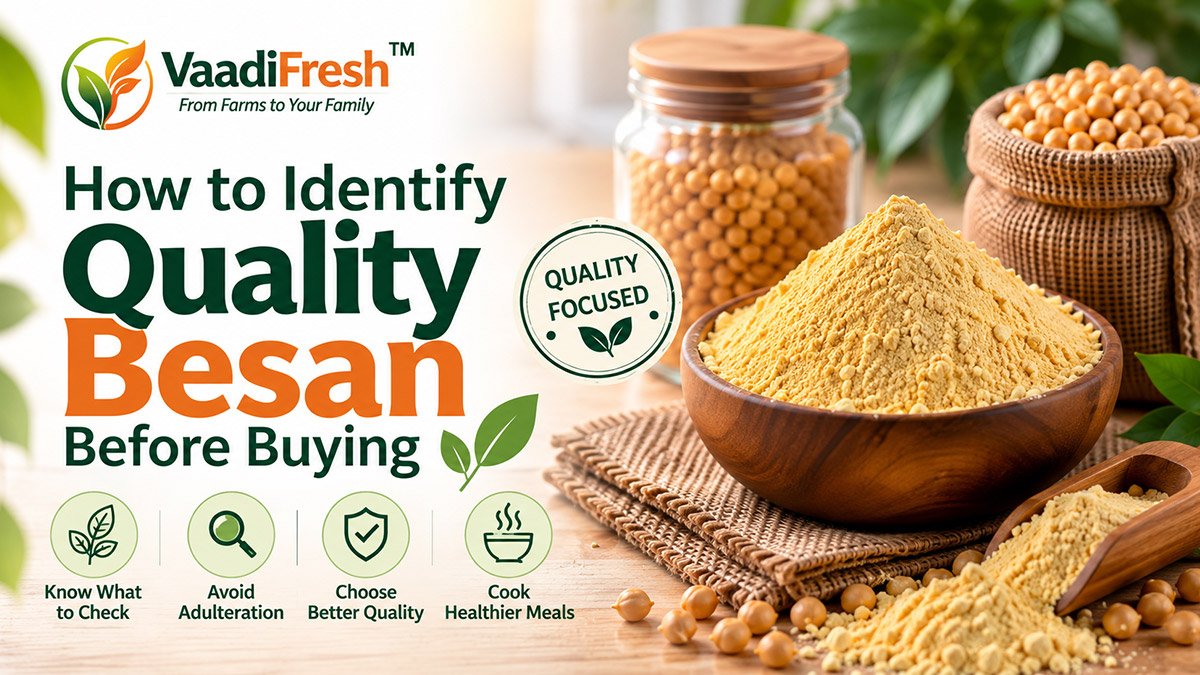
Quality besan made from ground chickpeas can have a slightly coarse, powdery texture, an earthy, nutty aroma, and a natural, creamy-yellow colour. If your besan feels as fine as cornstarch, smells completely neutral, or has a bright, neon-yellow tint, it is highly likely adulterated with yellow pea flour or artificial food coloring. Always buy besan from trusted brands, check the ingredient list, packaging details and freshness before purchasing.
Quick Tips for Buying Quality Besan
- Check the Color: Pure chana dal besan is naturally pale yellow with an earthy tone. Overly bright yellow flour often indicates added artificial colors to hide the presence of white pea flour.
- Feel the Texture: Premium besan should have a very slight, sandy coarseness when rubbed between your fingers. It should not feel completely slippery or ultra-fine.
- Smell the Flour: Authentic besan has a distinct, rich, and nutty aroma even in its raw form. Adulterated flour usually smells flat, dusty, or like raw dough.
- Avoid Unlabeled Loose Packs: Buying loose besan from open sacks increases the risk of adulteration, moisture damage, and pest contamination. Always choose properly sealed and branded packaging.
For more information on pulses and besan safety, see the official FSSAI guidance on pulses and besan.
Why Quality Besan Matters for Your Family
Choosing quality chana dal besan is about more than cooking; it is about selecting a product that suits your family’s everyday food needs. Pure besan is traditionally used in Indian households as a rich source of plant-based protein and dietary fiber, which can be part of a balanced diet.
When you use adulterated besan, the cooking chemistry fundamentally changes. Yellow pea flour absorbs water and oil differently than chana dal. This is why sometimes your pakoras turn out soggy and heavily oiled, or your halwa becomes unpleasantly sticky instead of smooth and rich. Investing in premium besan ensures that your traditional recipes turn out exactly the way they were meant to be.
Simple Checks You Can Try at Home
If you have already brought a packet of besan home and want to verify its quality, try these simple, practical tests in your kitchen:
The Dough Consistency Test
Take two tablespoons of besan and slowly mix in a few drops of water to form a tight dough. Pure chana dal besan will form a smooth, slightly firm dough. If the flour is mixed with yellow pea (matar) dal, the dough will feel highly sticky, rubbery, and difficult to wash off your hands.
The Taste and Aroma Test (Dry Roasting)
Heat a dry, thick-bottomed pan on a low flame and add a spoonful of besan. Dry roast it for a couple of minutes. Pure besan will quickly fill your kitchen with a beautiful, rich, and nutty aroma (similar to roasting whole chana). Adulterated besan will take much longer to release any smell, and the resulting aroma will be noticeably weaker and flatter.
The Acid Test (For Chalk or Artificial Powders)
Take a small spoonful of besan in a glass bowl and add a few drops of lemon juice or white vinegar. If you see active bubbling or fizzing, the besan has been adulterated with chalk powder or baking soda to increase its volume. This type of home observation may help you notice unusual reactions, but it should not be treated as a definitive test for adulteration. Reliable confirmation may require laboratory testing.
Practical Tips for Everyday Home Cooks
- Always Sift Before Using: Even the most premium besan can develop small natural lumps due to moisture. Always sift (chhaan lo) your besan before making batters or sweets to ensure a perfectly smooth, lump-free consistency.
- Control the Heat: Besan burns incredibly fast. Whether you are roasting it for laddoos or making a simple Gujarati kadhi, always cook besan on a low to medium-low flame. Patience is the key to unlocking its sweet, nutty flavor without burning it.
- Proper Storage: Transfer your besan to a clean, airtight steel or glass container immediately after opening the packet. Keep it in a cool, dry place away from your stove, as kitchen humidity can cause the flour to clump and spoil quickly.
Expert Tips for the Perfect Batter
If you are making pakoras or chillas, do not use the batter immediately after mixing. Whisk your pure besan with water and spices, then let the batter rest for 10 to 15 minutes. This hydration period allows the besan particles to absorb the water fully, resulting in a lighter, crispier, and more evenly cooked final dish.
Comparison Table: Quality Besan vs. Adulterated Besan
| Feature | Quality Chana Dal Besan | Adulterated (Pea Flour Mixed) Besan |
| Texture | Slightly coarse, natural feel | Overly fine, slippery, or chalky |
| Aroma | Nutty, warm, and earthy | Flat, dusty, or completely neutral |
| Dough Feeling | Smooth and manageable | Highly sticky, gummy, and rubbery |
| Oil Absorption | Moderate (results in crispy frying) | High (results in soggy, heavy frying) |
Common Mistakes When Buying and Using Besan
- Buying strictly on price: Pure chana dal is fundamentally more expensive than yellow peas. If a packet of besan is surprisingly cheap, it is almost certainly blended with inferior flours.
- Storing in the original torn packet: Leaving besan in an open plastic bag exposes it to pantry moths and moisture, causing the natural oils to become bitter over time.
- Skipping the roasting step for gravies: Adding raw besan directly to a watery gravy can leave an unpleasant raw aftertaste. Always lightly dry roast it or fry it in a little ghee before adding water to your curries.
Key Takeaways
- Always look for a natural pale yellow color and a slightly coarse texture when buying besan.
- Avoid loose, unbranded powders to minimize the risk of dangerous adulteration.
- Use the simple dough test to check for sticky, rubbery adulterants like yellow pea flour.
- Roast besan slowly on a low flame to safely develop its traditional, nutty flavor.
- Store premium besan in airtight containers away from heat to preserve its natural aroma and freshness.
Frequently Asked Questions
Can pure besan be stored in the refrigerator?
Yes, absolutely. Storing pure besan in the refrigerator or freezer in an airtight container is an excellent way to extend its shelf life. It prevents the natural oils in the chana dal from oxidizing and keeps the flour fresh for months. Just ensure it comes to room temperature before mixing it into batters to avoid lumping.
How long does besan stay fresh after opening?
Typically, pure besan stays fresh for up to 6 months if stored correctly in an airtight container in a cool, dry, and dark place. If exposed to heat, light, or moisture in the kitchen, its natural oils can turn rancid, making it taste bitter within 1 to 2 months. Always check for a fresh, nutty aroma before use.
Is besan exactly the same as chickpea flour?
Not exactly. In Western countries, “chickpea flour” is often made from white garbanzo beans (kabuli chana). Authentic Indian besan is made strictly from brown chickpeas (kala chana) that have been split and skinned (chana dal). This gives Indian besan its unique flavor profile and finer texture.
About VaadiFresh
VaadiFresh is committed to helping families make informed food choices by sharing practical kitchen knowledge and offering carefully selected everyday essentials. From whole spices and flours to pulses and grains, our focus is on quality, freshness and trustworthy sourcing. Through our educational guides, we aim to help home cooks understand ingredients better so they can make more confident purchasing decisions and enjoy better cooking results every day.
Need Help Choosing Quality Besan?
Whether you’re preparing pakoras, dhokla, sweets or everyday recipes, choosing the right besan can make a noticeable difference. If you have questions about product quality, bulk purchases or availability, feel free to contact VaadiFresh or visit our Bulk Orders page. We’re always happy to help you choose products that best suit your cooking needs.