
Have you ever opened a jar of cumin seeds and wondered why it no longer smells as fresh as the day you bought it? You might have even thought about throwing the batch away, assuming the quality was poor to begin with.
But here is a little kitchen secret: in many cases, the problem isn’t the spice itself—it is how it has been stored.
Whole spices naturally hold beautiful essential oils inside them. Those oils are exactly what gives your food that irresistible aroma and deep flavor. However, the moment you bring them into your kitchen, everyday elements like heat, air, and moisture start breaking those oils down.
In this guide, we will walk through exactly how to protect your spices so they stay vibrant, aromatic, and ready to elevate your cooking for months, or even years, to come.
Quick Storage Tips
- Store spices in glass or stainless steel airtight containers.
- Keep your spice rack far away from the cooking stove.
- Protect your jars from direct sunlight.
- Always use a clean, completely dry spoon.
- Buy only the quantity you can comfortably use in a few months.
- Keep your spices whole and grind them only when a recipe calls for it.
Why Storing Whole Spices Properly is Important
Think of whole spices as tiny flavor vaults. As long as the vault is closed properly, the flavor stays safe. When exposed to the elements, these oils evaporate.
Proper storage protects your spices from the four main enemies of freshness: heat, moisture, direct sunlight, and oxygen. By taking a few extra seconds to store them correctly, you ensure your meals are always packed with maximum flavor while saving money by drastically reducing kitchen waste.
10 Simple Tips for Storing Whole Spices
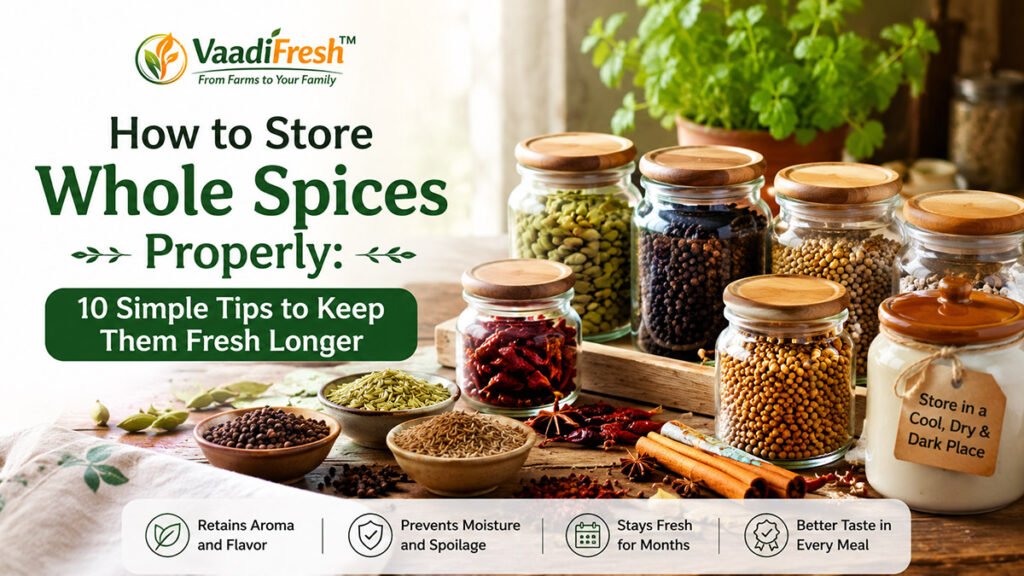
1. Always Use Airtight Containers
Air exposure dries out whole spices and drains their flavor. The best way to store them is in airtight glass jars, high-quality food-safe pouches, or food-grade stainless steel containers. Avoid keeping them in loosely rolled plastic packets once the seal is broken.
2. Keep Spices Away from the Stove
It is incredibly tempting to keep your daily spices right next to the gas stove for easy access while cooking. However, the constant heat radiating from the burner speeds up the breakdown of the essential oils. Always store your main spice jars in a cool cabinet.
3. Block Out Direct Sunlight
A sunny kitchen is beautiful, but UV rays quickly bleach the natural color and degrade the flavor of spices. Store your containers in a dark, enclosed pantry or a shaded drawer to keep their colors vibrant.
4. Use Only Dry Spoons
Moisture is the quickest way to ruin whole spices, leading to clumping and mold. Always use a completely dry spoon when taking out spices. Also, never shake a spice jar directly over a steaming pot—the steam will get trapped inside the jar!
5. Store Different Spices Separately
Every spice has a unique and powerful profile. If you store strong spices like [Link: Mustard Seeds] or [Link: Fenugreek] too closely with milder ones without proper seals, their aromas can permanently mix together. Give each spice its own dedicated container.
6. Grind Spices Only When You Need Them
Whole spices have a protective outer layer that keeps the flavor locked safely inside. Because of this, they naturally last much longer than pre-ground powders. For the absolute best culinary experience, keep your spices whole and crush or grind only what you need for today’s recipe.
7. Avoid Refrigerating Most Spices
A very common myth is that putting spices in the fridge extends their life. In reality, the changing temperatures when you take the jar in and out of the cold fridge create condensation (moisture) inside the container. A cool, dry room-temperature cupboard is a much better choice.
8. Buy in Practical Quantities
While buying massive bulk bags might seem cheaper in the moment, spices lose their potency over time. It is a much better strategy to buy the amount your family will reasonably consume within a few months. This guarantees you are always cooking with fresh batches.
9. Label Your Jars with Dates
It is easy to lose track of how long a jar has been sitting in the back of your cabinet. Use a small piece of masking tape or a sticker to write down the month and year you bought it.
10. Do the “Sniff and Look” Test
Not sure if your [Link: Coriander Seeds] or [Link: Cumin] are still good? Look at the color—is it still vibrant or has it turned dull and dusty? Next, crush a small amount in the palm of your hand and smell it. If the rich, natural aroma is weak or completely gone, it is time for a fresh batch.
Whole Spice Storage & Shelf Life Guide
To make things easy, here is a quick breakdown of how long common whole spices last and the best ways to care for them:
| Spice | Freshness | Best Storage | Avoid |
| Cumin Seeds | 2–3 Years | Airtight Glass / Steel Jar | Moisture & Heat |
| Coriander Seeds | 2–3 Years | Airtight Glass / Steel Jar | Direct Sunlight |
| Mustard Seeds | 3–4 Years | Airtight Glass / Steel Jar | Heat & Moisture |
| Fenugreek Seeds | 2–3 Years | Airtight Glass / Steel Jar | Air Exposure |
| Fennel Seeds | 2–3 Years | Airtight Glass / Steel Jar | Direct Sunlight |
Key Takeaways
- Whole spices stay fresh longer than ground spices.
- Airtight containers make the biggest difference.
- Heat, moisture, and sunlight are the biggest enemies.
- Buy smaller quantities for better flavor.
Frequently Asked Questions (FAQs)
Can whole spices expire?
While they do not spoil or go “bad” in a way that will make you sick (if kept perfectly dry), they do lose their natural oils, aroma, and flavor over time. Old spices will simply make your food taste bland.
Should whole spices be refrigerated?
Generally, no. The temperature changes cause condensation, which introduces moisture to your spices. A cool, dry kitchen cabinet is always the best place.
Which container is best for storing whole spices?
Airtight glass jars, food-grade stainless steel containers, or premium food-safe zipper pouches are excellent choices because they completely block out air.
Can I store spices near my cooking stove?
No. The heat and steam from daily cooking will quickly reduce the freshness and shelf life of your spices.
Can spices attract insects?
Yes, pantry bugs (like weevils or spice beetles) can find their way into poorly sealed spices. This is why using truly airtight containers and keeping the storage area clean and dry is so important.
Should spices be stored in plastic containers?
While heavy-duty, food-grade plastic is okay temporarily, glass or stainless steel is far superior. Cheap plastic is porous, meaning it can let small amounts of air in, and it often absorbs the smell of the spice permanently.
How often should I replace whole spices?
If stored correctly in airtight containers away from heat and light, most whole spices should be replaced every 2 to 3 years for optimal flavor.
Is refrigeration good during the monsoon?
During heavy monsoons when humidity is very high, some people prefer refrigerating spices to prevent fungus. If you must do this, store them in highly airtight containers and let the container come to room temperature before opening it to prevent condensation.
About VaadiFresh
At VaadiFresh, we believe quality begins with careful sourcing and proper storage. We carefully source our seeds and spices from trusted markets and experienced fellow farmers to bring you the best ingredients. Through our knowledge guides, we aim to help every home cook make informed choices about everyday kitchen essentials.
Need Help Choosing Quality Spices?
Have questions about whole spices, product availability, or bulk purchases? Our team is always happy to help. Feel free to contact VaadiFresh for product-related assistance or visit our Bulk Orders page if you’re looking for wholesale pricing or regular business supplies.